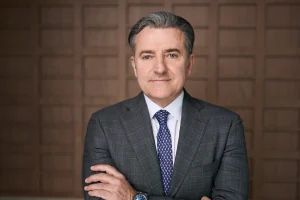
Excerpt from the interview given by Mr. Corneliu Bodea, CEO of Adrem and President of CRE for e-nergia.ro
As we know, the Commission has a policy for the decarbonization of the energy sector, as part of the larger Green Deal package. However, the energy transition has a relatively high cost for Romania, because we still have enough coal capacities. Do you think Romania should receive more from the European Commission to support its energy transition? And how should it ask for more?
I believe that Romania is an example of good practice in terms of the development of energy from renewable sources and I believe in our ability to align ourselves with European energy and climate objectives. At the same time, the European Union’s goal of carbon neutrality by 2050, with the limitation of greenhouse gases to 55% by 2030, is extremely ambitious, and the conditions and limits imposed by the European Commission are severe.
The target imposed by the Taxonomy of 100 g CO2/KWh for generation from liquid and gaseous fossil fuels is far below the emission reduction value that the best available technologies achieve, and Romania is not prepared and cannot reasonably comply with these limits.
This is where the very important role of our diplomacy comes into play in the debates in Brussels on adapting to European legislation and agreeing on a transition calendar, starting from Romania’s energy reality. But I believe in our ability to correctly recognize the level from which we start and to decide with confidence and courage for the benefit of the industry and the end consumer.
As far as coal capacities are concerned, as we see in the case of the Oltenia Energy Complex (CEO), which has been an element of stability for local communities and has historically ensured Romania’s energy security, solutions can be found to diversify generation capacities and reprofessionalize employees.
The CEO communicated a complex investment strategy for the next five years and let’s not forget that the situation in which companies in the generation sector find themselves comes amid a problem of grouping them by monofuel sources, something that must be corrected as soon as possible.
The European Commission has made generous funds available to Member States to address the transition to a low-carbon economy. However, as with many European funding programmes, from pre-accession to operational programmes to research-innovation-development, Romania has experienced shortcomings in the absorption of these funds, as well as a weak institutional capacity to implement partnerships with the business environment.
The issue of lack of competitiveness in the electricity production sector can be solved, but even if it takes time, it must be addressed in the end. The alternative is that, year after year, we highlight the same deficiencies and shortcomings, rhetoric that must stop. We are seeing higher and higher prices, as well as the reversal of the import-export balance, with Romania “solidifying” its status as a net energy importer in 2020 for the second consecutive year. Romania’s competitiveness externally requires a strong internal environment, which must be the cornerstone of national policies and the interests of an upright political class.
The installed capacity on coal represents, according to ANRE statistics, over 23% of the total installed capacity. However, we notice that in 2020, coal provided around 17% of the total electricity production. Thus, nature follows its natural course, and the share of coal in the production basket will gradually decrease, regardless of national or European policies. Doing the same things, but expecting different results, is Einstein’s very inspired definition of madness.
Moreover, the decarbonization policy should be combined with measures to increase energy efficiency. There are studies according to which 1MW saved per user is equivalent to 3-4 MW per producer, so energy efficiency can have huge results in terms of modernizing the production sector and limiting greenhouse gas emissions.
Beyond what we could ask of others, at home, do you think that, at the level of government policies, enough is being done to change the energy mix to a greener one? We know there are plans, but on the ground the situation is not encouraging at all – a new MW in wind power has not been installed for years, for example
I believe that optimization together with the modernization of the field of electricity generation, which is an integral part of the national economy, should be on the short list of priorities of the Romanian authorities. The organization of producers in companies on the principle of the production method meant that there was no real competition, they no longer had reasons to invest and become more efficient, and Romania consequently became a net importer of energy.
The increase in the price of electricity and production is an important problem as we have seen in the last two years and let’s not forget that in 2020 Romania presented among the highest prices in the coupling mechanism 4 MMC (Romania, Hungary, Czech Republic and Slovakia).
Romania has never lacked investors, what was lacking was the creation of a framework to encourage and support them. We know the evolution and the many changes in the support scheme through green certificates, and large investment projects in new production units or in the capitalization of domestic resources are dragging on.
We urgently need to apply PPA-type contracts, which would provide confidence to investors in the long term and eliminate the need for state involvement and the need for support schemes from public funds. Last but not least, public-private partnerships can unlock large investment projects across the economic spectrum.
Everyone is aware that this is the last year for Romania to make a decision regarding the extraction of gas from the Black Sea, if it still wants to use this resource for electricity generation, at least. Do you expect us to have a favorable decision for these resources this year, after a long period of inaction? Do you think that the role of gas in our energy transition has been overestimated given that the cost of emissions keeps increasing and it is possible that in 10-15 years gas will be today’s coal? What should be done?
Natural gas is certainly the transition fuel of the European Union, but this window may close if we fail to take advantage of the immense opportunity that the Black Sea represents.
In this context, I believe that the exploitation of gas from the Black Sea should start as soon as possible, including from the point of view of the reconstruction of the petro-chemical industry. We expect the offshore law to be amended this year, as stated by the Minister of Energy, Virgil Popescu. Subsequently, according to Mrs. Christina Verchere, up to 5 years are needed for the actual exploitation. Projects of such magnitude require considerable time frames from decision to exploitation, so we are already at the 12th hour. What is important is what I have already said, the political class must quickly define the long-term national strategy, define a clear way of working and schedule and carefully select its partners.
Read the full article on e-nergia.ro