

We invite you to read below the interview given by Adrem CEO, Corneliu Bodea for www.newsenergy.ro
You represent an organization that functions as a platform for dialogue between the energy industry environment, the competent authorities in Romania and the relevant institutions at the level of the European Union. What do you think should be the priority topics on the agenda of the Ministry of Energy/Government this year and why? Let’s list the most important of them.
C.B.: There are some major themes that Romania must address in order to create an environment conducive to the development and affirmation of our energy sector at regional level, which is not lacking in resources, competent specialists in the field and market players to lead us to progress. A problem that has been perpetuated over time is the unpredictable legislative framework, which does not encourage investments and this is true not only for the energy industry, because I have said on several occasions that I admire entrepreneurs and their courage to move forward in a context that even before the pandemic was not more favorable.
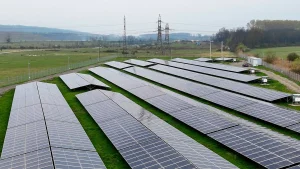
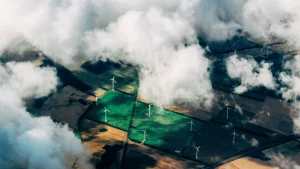
Smart grids, smart metering, but also the production of energy from renewable sources together with the development of battery storage capacity are some examples of priority measures on the agenda of a Government that create the premises for a sustainable economic reconstruction.
Also, the gas resources in the deep perimeters of the Black Sea can ensure the domestic consumption of natural gas, as well as the recovery of the petrochemical industry, which is why it is important for Romania to start exploiting them as soon as possible and thus strengthen its position in the region.
Climate change dominates the global agenda. Sustainability is starting to be included by default in the development strategies of large companies, but also of large cities. How seriously is this issue treated in Romania and how should we proceed?
The images from northern China in which, temporarily, with the outbreak of the health crisis and the slowdown of industrial activities, the curtain of smog was removed, are very telling in this regard. The same phenomenon we have seen in American metropolises and in cities in Europe that have somehow “frozen” in a lull that has allowed us to see more clearly than ever what the effects of our actions are. Regarding how we should proceed, I see only one solution: with responsibility. Sustainability is no longer part of a certain progressive thinking or a target that we must achieve in a number of years. It must be ensured now and everyone’s involvement is needed, from the state authorities, to the companies that must see beyond the flight for marginal profit and to us, who can no longer continue with the same old behaviors that brought us here.
Last year was a full one in terms of regulations at European level for the transposition of the Green Deal, which has as its central objective the reduction of greenhouse gas emissions by 55% by 2030 and emission neutrality by 2050. We had the Renovation Wave, the Hydrogen Strategy, the Taxonomy, etc. How do all these changes affect / influence our energy policy and how well are they transposed into national policies?
The European Commission is the main European force on political commitments on climate change. The goal of carbon neutrality by 2050 is unparalleled in history, with an intermediate limit of greenhouse gas emissions set at 55% by 2030. Recent history shows us that it is possible, and Romania is an example of good practice regarding at least the development of energy from renewable sources. I choose to be confident in our ability to align ourselves with the European Union’s energy and climate objectives, to correctly recognize the level from which we start and to decide with confidence and courage for the benefit of the industry and the end consumer.
Regarding the Taxonomy, respectively the development of an investment classification system for economic activities, I believe that this set of rules represents the cornerstone for investors and for achieving the European Union’s environmental objectives for 2030, as well as for climate neutrality by 2050.
In addition, in order to meet the limits recommended by the EC, the fuel mixture used should contain decarbonated gases, such as hydrogen. At the moment we do not know the economic feasibility of such technical solutions, there is no hydrogen market for estimating the real costs in the medium and long term and implicitly it is impossible to verify the price affordability criterion for the final consumer in Romania.
Considering Romania’s commitments under the National Integrated Energy and Climate Change Plan as well as the National Energy Strategy 2020-2030 with the perspective of 2050, we express our doubt about achieving the targets in conditions of economic efficiency and affordability for energy users.
New important changes will follow, including the revision of the Renewable Energy Directive and the Energy Efficiency Directive. What are, from your point of view, the prospects of the Romanian energy industry regarding the transition to a low-carbon economy? How should this transition be made? What opportunities/risks does it generate for both the energy sector and the economy as a whole?
The obligation of those who lead us will be to ensure legislative predictability, competent decision-makers, financial support for technologies that will reduce carbon emissions, while developing new sources of electricity to gradually replace those that use coal, as well as energy efficiency measures throughout the value chain of the energy sector.
Moreover, it is vital to encourage the field of research and innovation and the development of public-private partnerships with investors. Romania should also play an active role in Europe on the production of green hydrogen, through electrolysis, using electricity from renewable sources as well as hydrogen from hydrocarbon sources, but with carbon capture.
We see that the standards for buildings are becoming stricter, so that this sector plays the really important role it has in combating global warming. What is the potential of energy efficiency in buildings in Romania and what measures would you recommend the Government to take for this sector?
Starting with December 31, 2020, in Romania all buildings for which building permits are issued after this date must comply with the “nearly zero energy building” standard, according to European directives. For public buildings this was a mandatory requirement since the end of 2018, and now the responsibility to build energy efficiently lies with everyone, both the state and private companies that invest in office buildings or residential complexes, but also ours, each of us.
As for the existing buildings, it is not news to anyone that we have many old buildings – in Bucharest, for example, statistics show that a third of the buildings are over 50 years old, and we know that the consolidations are difficult and difficult, not to mention energy efficiency. The potential exists precisely because we have a lot of work to do in this regard, and buildings with a significant contribution to greenhouse gas emissions represent a sector with a key role in achieving the European Union’s objectives, if we manage to implement this energy efficiency. A clear and transparent legislative framework is needed and it is an obligation of local authorities, which also benefit from funding from the European Commission, to do so and to get involved in providing the necessary legislative and financial support.
Read the rest of the article on newsenergy.ro